
What is LoRaWAN?
LoRaWAN (Long Range Wide Area Network) is a low-power, wide-area networking protocol designed to connect IoT devices wirelessly to the internet, particularly over long distances and with low power consumption. It uses the LoRa radio modulation and operates on unlicensed radio frequencies, making it suitable for applications where battery life and range are crucial, such as smart cities, industrial automation, and environmental monitoring.
Building a LoRaWAN Network
A LoRaWAN network can be built and operated in almost any country. LoRaWAN uses unlicensed wireless spectrum to send and receive data wirelessly. However, it is very important to check the wireless transmission regulations in your country for the frequency ranges, maximum allowed transmission power, and maximum allowed antenna gain you use with your LoRaWAN devices and gateways, with the respective telecommunication authorities first.
LoRaWAN uses very small payloads (11 bytes in the US) to transport data within a message.
A LoRaWAN network consists of several hardware and software components.
End devices
End devices have built-in sensors and actuators. Some end devices have only sensors, others have only actuators, and some have both.
End devices send and receive LoRa modulated messages.
Sensors send LoRa modulated uplink messages to the LoRaWAN Network server, either periodically (e.g., temperature, humidity) or in response to an event (E.g., motion detection, temperature reached a certain threshol, etc). Sensors receive LoRa modulated downlink messages too. These messages contain configuration information or acknowledgments from the network server.
Actuators receive LoRa modulated downlink messages from the network server. They perform actions based on the received command, such as turning a relay or solenoid valve on or off.
An end device is not configured to connect with a specific gateway. In other words, it doesn't have any knowledge of the surrounding gateways. Instead, it simply transmits (uplinks) messages.
Dragino manufactures end devices that fall into three categories: sensors, actuators, and devices that perform both functions. Visit our LoRa/LoRaWAN End Node page to choose the most suitable sensors and actuators for your next IoT use case.
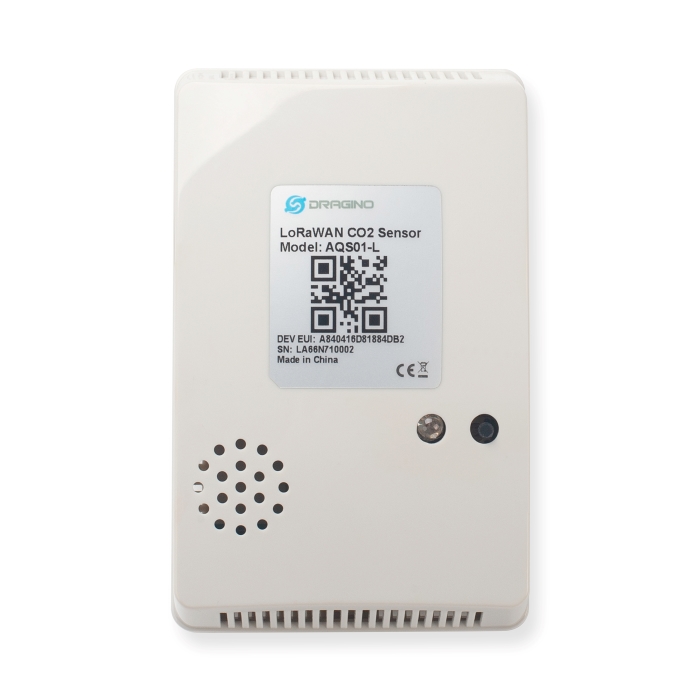
The following image shows a LoRaWAN end device that works as a CO2 sensor. Its main function is to periodically send uplink messages containing air qualiy measurements to the Network Server. These sensors consume very low power and usually operate with AA batteries.
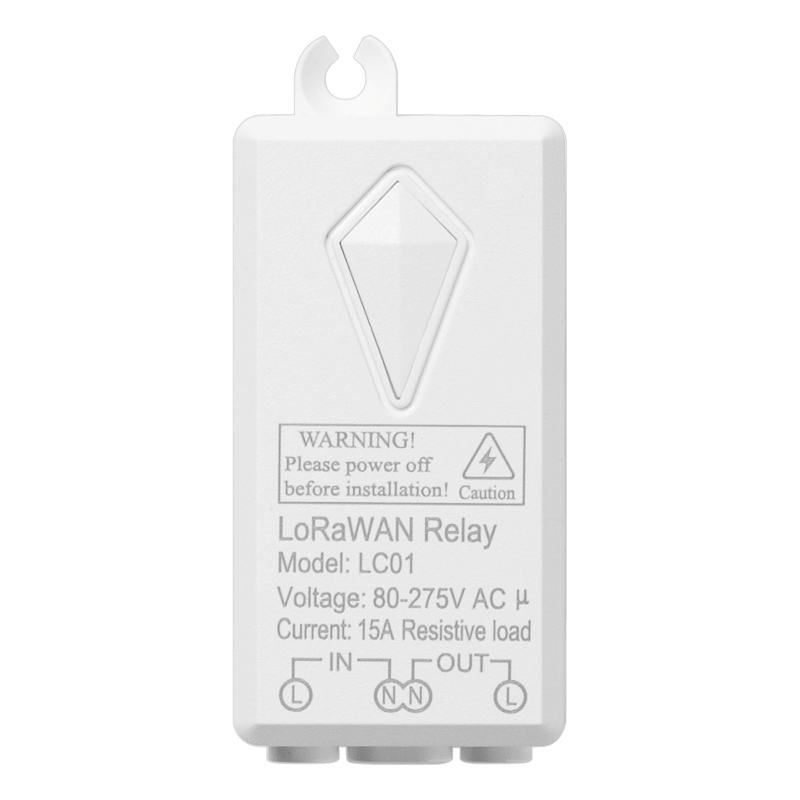
The following image shows a LoRaWAN end device mainly works as an actuator (with an internal relay). Its main function is to receive downlink messages from the Network Server then acts accordingly. It also sends uplink messages such as device status or acknowledgements to the Network Server. These end devices usually operate in Class B or Class C mode. Due to their continuous reception of downlink messages, they consume more power than sensors and are usually connected to the mains power supply.
Gateways
Gateways receive messages from end devices and forward them to the Network Server. They also receive messages from the LoRaWAN Network Server they connect to and then forward those messages to the end devices they belong to. If an uplink message is received by more than one gateway, all gateways forward that message to the Network Server. However, when sending a downlink, the Network Server selects the best gateway to forward a message to an end device. This selection is based on parameters such as RSSI and the time taken to receive the previous messages from that end device.
The gateway is preconfigured to connect to the Network Server using several connection parameters.
Gateways can be divided into two groups:
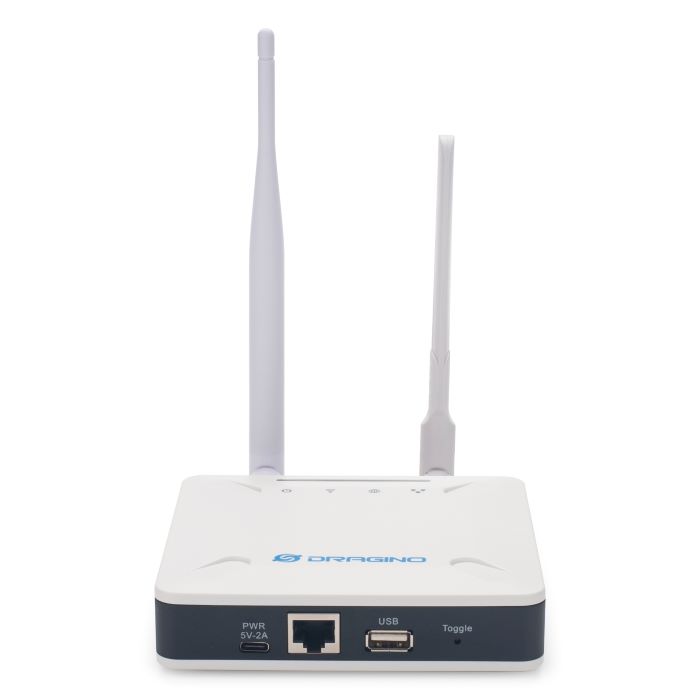
- Indoor gateways: Indoor gateways are suitable for installation inside buildings to communicate primarily with indoor sensors. They are ideal for receiving signals from sensors located across multiple floors, through walls, or in the basements of large apartment buildings. Depending on the building’s infrastructure, you may need to install multiple indoor gateways to ensure reliable coverage. If you want to cover LoRa-enabled utility meters installed in a building’s basement, placing an indoor gateway directly in the basement is a good idea. These gateways come with either internal antennas (e.g., PCB antennas) or external pigtail antennas. The following image shows the Dragino LPS8v2 Indoor LoRaWAN Gateway.
Of course, depending on the installed location (e.g., close to one of the outer walls of a building), indoor gateways can receive signals from outdoor sensors.
The following image shows an indoor gateway (connected to The Things Stack Community Edition) installed in a building by plugging it directly into a wall socket on a wall facing the street. It can randomly receive LoRa messages from various moving LoRaWAN sensors.
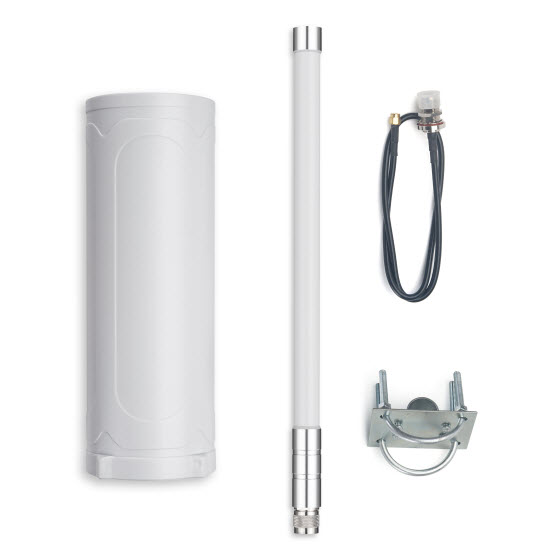
- Outdoor gateways: Outdoor gateways are suitable for providing coverage in outdoor environments such as urban, suburban, and rural areas. They offer optimal coverage for sensors installed outdoors, including tracking devices, streetlights, environmental sensors, wildfire detectors, and more. These gateways have outdoor antennas for better coverage. The following image shows the Dragino DLOS8N Outdoor LoRaWAN Gateway.
Network Server
Network Server manages the entire LoRaWAN network such as routing, security, and radio parameters. It forwards application specific messgaes to the Application server. If a network server receives the same message from more than one gateway, it only selects one message out of them based on their radio parameters. This is called 'deduplication'. Some of the popular LoRaWAN network servers include:
- The Things Stack
- ChirpStack
- Loriot
- Actility ThingPark
Application Server
The application server receives and processes application-specific data. It also generates application-specific payloads. An application server can run multiple applications. Applications on the application server can be integrated with third-party IoT platforms to gain actionable insights.
Join Server
The Join Server is responsible for session key generation. The can be a part of the Network Server or a standalone server.
LoRaWAN is now an ITU standard.
As announced by the LoRa Alliance on December 7, 2021, LoRaWAN is officially approved as a standard for Low Power Wide Area Networking (LPWAN) by the International Telecommunication Union (ITU).
Read the Lora Alliance® Press Release, LoRaWAN® Formally Recognized as ITU International Standard for Low Power Wide Area Networking for more information.
https://lora-alliance.org/lora-alliance-press-release/lorawan-formally-recognized-as-itu-international-standard-for-low-power-wide-area-networking/