LC01 - LoRaWAN Relay
Dragino LC01 is a LoRaWAN relay, a Class C device that can be used to control electrical devices or circuits in real time, up to 15A.
Features
- Operating voltage: 80–275V AC - The relay can control an electrical device or circuit (usually referred to as the load) that operates between 80–275V AC. Please note that DC loads cannot be connected.
- LoRaWAN Class C – With the LoRaWAN Class C mode of operation, you can send downlink commands to the relay in nearly real time.
- Advanced Safety: Integrated protection against overcurrent, overvoltage, short circuits, and temperature rise, helping reduce the risk of damage from lightning strikes.
- Rugged Enclosure: Made from fireproof PC material with UV-resistant additives, ensuring long-term durability without discoloration.
- Longer Life with Zero-Crossing Trigger: The LC01 includes a patented zero-crossing trigger, which minimizes electrical stress and extends the device’s operational life.
Read the LC01 technical documentation for more information.
Registartion
The LC01 is assigned a unique DevEUI (identifier), AppEUI (identifier), and AppKey (key) during manufacturing. After purchasing the LC01, you must first register it with a LoRaWAN network using these keys and identifiers.
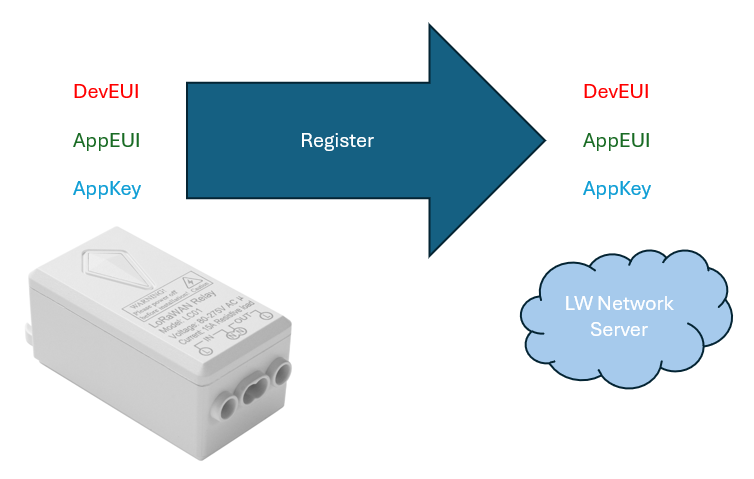
Registration can be done in two ways, and each method leads to a different type of device activation:
- OTAA
- ABP (not recommended, not secure)
Activation
Once you register the LC01 with a LoRaWAN Network Server, the next step is to activate it. It's simple. You only need to power up the relay. It will automatically perform the join procedure on the network and will be ready to control electrical appliances or circuits.
We recommend using OTAA. Read OTAA for more information.
Integration
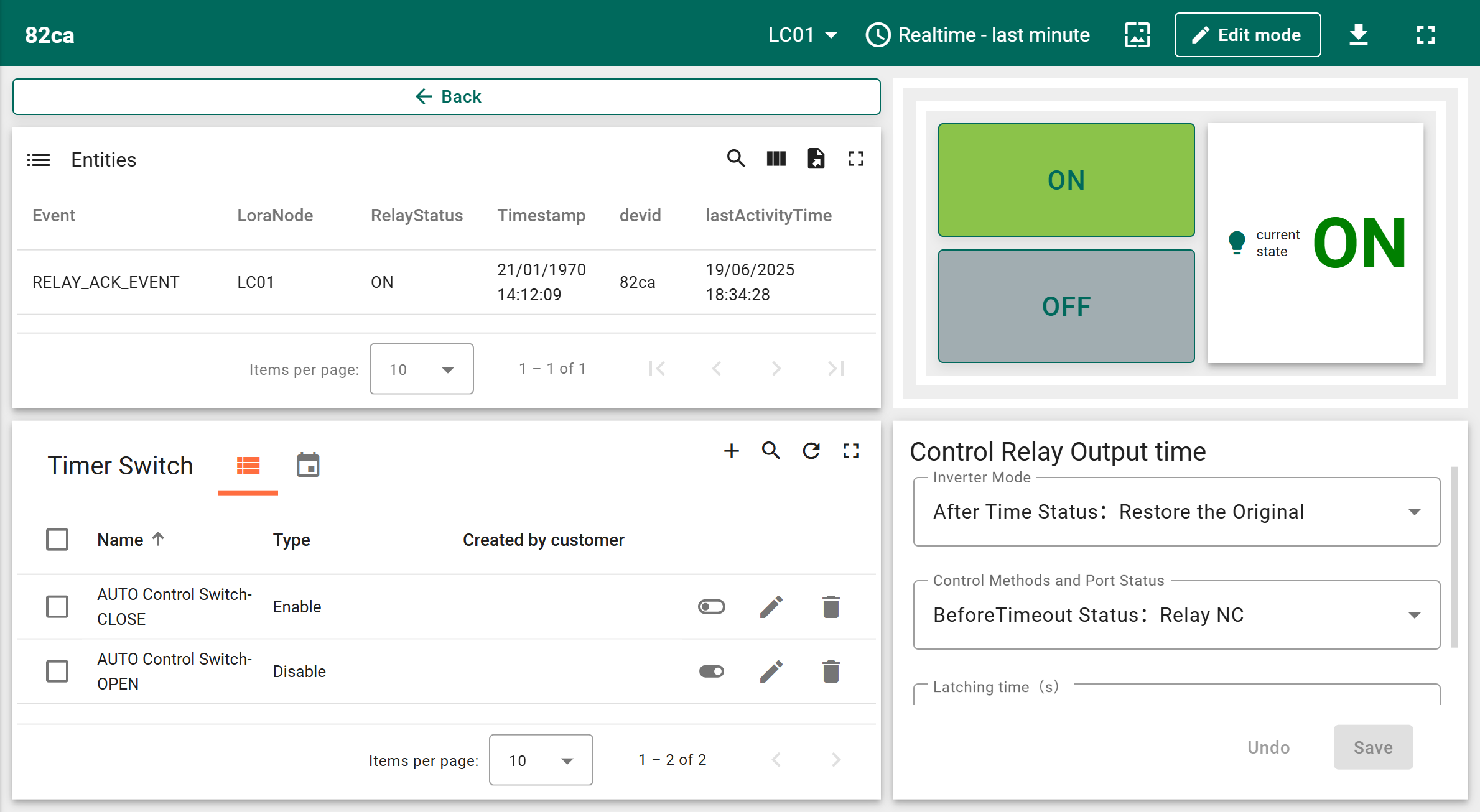
LC01 can be inegrated with different IoT platforms such as ThingsBoard, Datacake, TagoIO, myDevices, akenza.io. to create dashboards to control the relay and get it's current status. The following figure shows a dashboard created with ThingsBoard.