
Radio Propergation
In this tutorial, you will learn some important ways LoRa signals propagate.
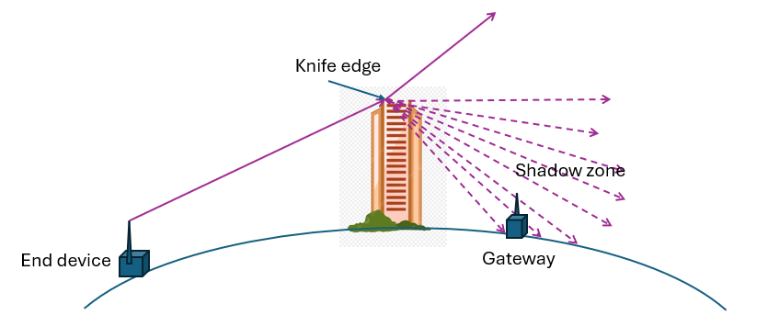
Imagine there's a tall building or mountain between an end device and a gateway. At first, it may seem like the signal won't get through at all. But in some cases, the shape of the object helps. If the building or mountain has a sharp edge, it can act like a knife edge. This causes the radio signal to diffract, or bend slightly, allowing some of the signal to reach the area behind the obstacle. This is called the shadow zone. So even when there's no direct line-of-sight, communication may still be possible, although the signal will be weaker.
This type of coverage is important in,
- urban areas with many tall buildings (for example, for environmental sensors).
- hilly areas (for animal tracking).
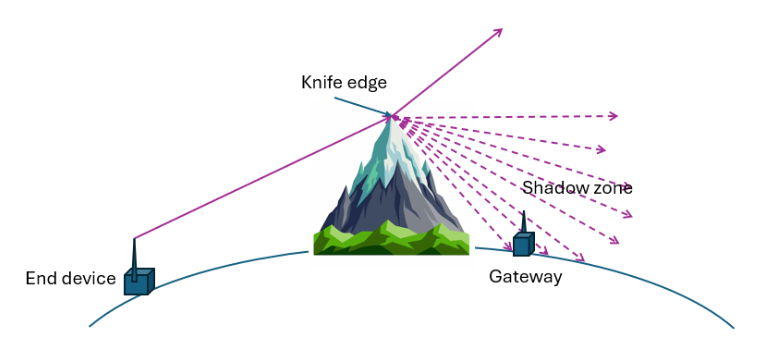
Dragino sensors and outdoor gateways work great in urban, dense urban, and hilly-mountain terrains without line-of-sight between the sensor and the gateway.